
Winter in Ontario changes how we move. Sidewalks become unpredictable. Parking lots turn icy. Stairs feel riskier. Even walking from your car to the grocery store can suddenly require more focus and tension than it did a few months ago — increasing the risk of slips and falls.
Confidence Comes From Preparation
A fall can decrease your confidence long before it injures your body. It can make you hesitate, shorten your stride, avoid walks, skip activities, or rely more heavily on railings and supports. Over time, that hesitation often leads to moving less — and unfortunately, moving less increases fall risk even more.
But here’s the empowering truth: Balance is trainable. Stability is trainable. Confidence is trainable.
At Longevity Nexum, we don’t look at balance as something you either “have” or “don’t have.” We look at it as a system — one that can be strengthened and improved at any age.
True balance is a combination of strength, mobility, coordination, and reaction time. Your hips and glutes stabilize you when you slip. Your core helps you control momentum. Your ankles adapt to uneven ground. Your nervous system reacts in milliseconds to keep you upright.
When these systems are strong and working together, you don’t just stand better — you recover better.
Why Walking Alone Isn’t Enough for Fall Prevention
Many people assume that feeling unsteady is simply part of aging. In reality, it’s often a sign that certain muscles haven’t been challenged in a while, or that the body hasn’t been asked to adapt to changing environments. The good news is that the body responds quickly when given the right stimulus.
If you’re already exercising, that’s a fantastic start. But not all exercise directly improves balance. Walking is great for cardiovascular health, but it doesn’t necessarily train single-leg stability or quick reactions. Traditional strength training builds muscle, but without intentional stability work, some of the protective benefits are left untapped.
This is where working with a Kinesiologist makes a difference.
How a Kinesiologist Can Help Reduce Your Risk of Falling This Winter
At Longevity Nexum, we assess how you move — not just how strong you are. We look at asymmetries, ankle mobility, hip control, posture, and how your body responds to small balance challenges. Then we build programming that strengthens the exact systems that reduce fall risk.
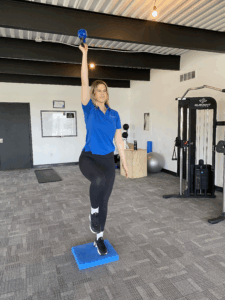
That might mean improving single-leg strength so you feel steady stepping off a curb. It might mean increasing ankle mobility so you can adapt to uneven terrain. It might mean practicing controlled instability in a safe environment so your nervous system becomes faster and more confident when something unexpected happens.
And perhaps most importantly, it rebuilds trust in your body.
Winter doesn’t have to shrink your world. It can be a season where you build resilience instead.
Longevity isn’t just about adding years to your life. It’s about preserving independence, confidence, and freedom of movement in every season. If fear of falling has started to creep in — or if you simply want to stay ahead of it — proactive balance training is one of the most powerful investments you can make.
For more information contact our team of Kinesiologists today (705) 796-6135. We are here to help you stay strong, steady, and confident — this winter and for years to come!



0 Comments