
If your day starts with stiffness… and ends with reaching for something like Advil or Ibuprofen for pain relief—you’re not alone.
For many people, this becomes the routine. A sore back, tight hips, aching knees—it feels easier to take something and move on than to ask why it keeps happening. And if you’ve never exercised before, the idea of starting when your body already hurts can feel counterintuitive. In your mind, pain means rest… not movement.
But here’s where things get misunderstood:
Pain relief and pain resolution are not the same thing.
Your Body Is Missing Support
Most ongoing aches aren’t random. They’re often the result of muscles that aren’t doing their job.
Your muscles are meant to support your joints, absorb force, and help your body move efficiently throughout the day. When they’re weak or underused, that support system starts to break down. More stress shifts into your joints—your lower back, hips, knees, and shoulders—and over time, that can show up as persistent discomfort or even conditions like chronic low back pain.
So when your body feels stiff or sore, it’s often not something to ignore—it’s feedback.
The Cycle That Keeps You Stuck
Medication like Ibuprofen can be helpful in the short term. It reduces inflammation and takes the edge off. But it doesn’t rebuild strength or improve how your body moves.
What tends to happen is a quiet cycle:
- pain shows up
- movement is avoided
- muscles weaken further
- pain returns more easily
Over time, your body becomes less tolerant to everyday activities, not more. The solution that feels easiest in the moment slowly creates a bigger problem in the long run.
The Fear Around Exercise
It makes sense why exercise doesn’t feel like the answer.
If bending, reaching, or even getting out of a chair already feels uncomfortable, the idea of “working out” can sound like it would only make things worse. And without past experience, it’s hard to see how exercise could actually help pain instead of aggravate it.
But the right kind of movement doesn’t break your body down—it builds it back up.
When exercise is introduced properly, it improves circulation, reduces stiffness, and most importantly, strengthens the muscles that protect your joints. Done at the right level, it often reduces discomfort rather than increasing it.
What Building Resilience Actually Means
Resilience isn’t about being pain-free all the time. It’s about having a body that can handle life better.
It’s the difference between:
- feeling stiff after sitting and loosening up quickly
- tweaking something and recovering in days instead of weeks
- moving with confidence instead of hesitation
That doesn’t come from avoiding movement. It comes from gradually reintroducing it in a way your body can adapt to.
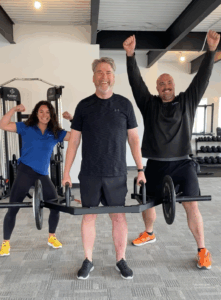
How Longevity Nexum Helps With Pain Relief
At Longevity Nexum, we work with people who feel stuck in this exact cycle—relying on quick fixes, unsure where to start, and hesitant about exercise.
Our Kinesiologists take a different approach. Instead of jumping straight into workouts, we first look at how your body is moving and where it’s lacking support. From there, we build a plan that starts at a level that feels manageable and safe.
There’s no guesswork, and no “push through the pain” mentality. You’re guided through each step so your body can adapt gradually, regain strength, and start to feel more capable again.
A Different Way Forward
You don’t have to keep relying on something like Advil every time your body feels off. And you don’t have to accept stiffness and discomfort as your normal.
There’s another option—one where your body becomes stronger, more supported, and more resilient over time!
Written By: Kelly Gamey




0 Comments